
What are the coating options for a vertical mast to prevent corrosion?
As a supplier of vertical masts, I understand the critical importance of protecting these structures from corrosion. Corrosion not only compromises the structural integrity of the mast but also shortens its lifespan and increases maintenance costs. In this blog post, I will explore various coating options available for vertical masts to prevent corrosion, providing insights into their properties, advantages, and limitations.
1. Galvanized Coating
Galvanizing is a widely used method for protecting steel structures from corrosion. It involves applying a layer of zinc to the surface of the steel through a process called hot-dip galvanizing. During this process, the steel is immersed in a bath of molten zinc, which forms a metallurgical bond with the steel surface.
Properties
- Zinc acts as a sacrificial anode, meaning it corrodes preferentially to the steel. This provides cathodic protection to the underlying steel, even if the coating is scratched or damaged.
- Galvanized coatings are highly durable and can provide long-term protection in a variety of environments, including marine, industrial, and rural settings.
- The zinc coating has a relatively smooth surface, which can help to reduce the accumulation of dirt, debris, and other contaminants.
Advantages
- Cost-effective: Galvanizing is generally more cost-effective than other coating methods, especially for large-scale applications.
- Low maintenance: Once applied, galvanized coatings require minimal maintenance, reducing the overall cost of ownership.
- Long lifespan: Galvanized coatings can last for decades, depending on the environment and the thickness of the coating.
Limitations
- Limited aesthetic options: Galvanized coatings have a characteristic silver-gray appearance, which may not be suitable for all applications.
- Difficult to repair: If the galvanized coating is damaged, it can be difficult and expensive to repair.
- Not suitable for high-temperature applications: Galvanized coatings may not be suitable for applications where the mast is exposed to high temperatures, as the zinc coating can break down at elevated temperatures.
2. Powder Coating
Powder coating is a dry finishing process that involves applying a fine powder of pigment and resin to the surface of the mast. The powder is electrostatically charged and then sprayed onto the mast, where it adheres to the surface. The mast is then heated in an oven, which causes the powder to melt and flow, forming a smooth, durable coating.
Properties
- Powder coatings are available in a wide range of colors and finishes, allowing for greater aesthetic flexibility.
- The coating is highly resistant to chipping, scratching, and fading, providing long-term protection and a high-quality appearance.
- Powder coatings have a low VOC (volatile organic compound) content, making them an environmentally friendly option.
Advantages
- Aesthetic appeal: Powder coatings offer a wide range of color and finish options, allowing for greater customization and a more attractive appearance.
- Durability: The coating is highly resistant to wear, tear, and corrosion, providing long-term protection in a variety of environments.
- Environmental friendly: Powder coatings have a low VOC content, reducing the impact on the environment.
Limitations
- Higher cost: Powder coating is generally more expensive than galvanizing, especially for large-scale applications.
- Limited thickness: Powder coatings are typically thinner than galvanized coatings, which may limit their effectiveness in highly corrosive environments.
- Difficult to repair: If the powder coating is damaged, it can be difficult to repair, especially if the damage is extensive.
3. Epoxy Coating
Epoxy coatings are a type of protective coating that is made from a combination of epoxy resin and a hardener. The epoxy resin and hardener are mixed together and then applied to the surface of the mast using a brush, roller, or spray gun. The coating then cures to form a hard, durable film that provides excellent protection against corrosion, chemicals, and abrasion.
Properties
- Epoxy coatings are highly resistant to corrosion, chemicals, and abrasion, making them suitable for use in a variety of harsh environments.
- The coating has a high gloss finish, which can provide a professional and attractive appearance.
- Epoxy coatings can be formulated to have a variety of properties, such as flexibility, hardness, and chemical resistance, depending on the specific application.
Advantages
- Excellent corrosion protection: Epoxy coatings provide excellent protection against corrosion, even in highly corrosive environments.
- Chemical resistance: The coating is highly resistant to a wide range of chemicals, including acids, alkalis, and solvents.
- Abrasion resistance: Epoxy coatings are highly resistant to abrasion, making them suitable for applications where the mast is exposed to wear and tear.
Limitations
- Long curing time: Epoxy coatings typically require a long curing time, which can delay the installation and use of the mast.
- Limited flexibility: Epoxy coatings are relatively rigid, which may limit their effectiveness in applications where the mast is subject to bending or flexing.
- Difficult to apply: Epoxy coatings require careful preparation of the surface and precise application techniques, which can make them more difficult to apply than other coating methods.
4. Polyurethane Coating
Polyurethane coatings are a type of protective coating that is made from a combination of polyurethane resin and a hardener. The polyurethane resin and hardener are mixed together and then applied to the surface of the mast using a brush, roller, or spray gun. The coating then cures to form a hard, durable film that provides excellent protection against corrosion, abrasion, and UV radiation.
Properties
- Polyurethane coatings are highly resistant to corrosion, abrasion, and UV radiation, making them suitable for use in a variety of outdoor environments.
- The coating has a high gloss finish, which can provide a professional and attractive appearance.
- Polyurethane coatings can be formulated to have a variety of properties, such as flexibility, hardness, and chemical resistance, depending on the specific application.
Advantages
- Excellent weather resistance: Polyurethane coatings provide excellent protection against UV radiation, moisture, and other environmental factors, making them suitable for use in outdoor applications.
- Abrasion resistance: The coating is highly resistant to abrasion, making it suitable for applications where the mast is exposed to wear and tear.
- Flexibility: Polyurethane coatings can be formulated to be flexible, which can help to prevent cracking and peeling in applications where the mast is subject to bending or flexing.
Limitations
- Higher cost: Polyurethane coatings are generally more expensive than other coating methods, especially for large-scale applications.
- Long curing time: Polyurethane coatings typically require a long curing time, which can delay the installation and use of the mast.
- Difficult to repair: If the polyurethane coating is damaged, it can be difficult and expensive to repair.
5. Considerations for Coating Selection
When selecting a coating for a vertical mast, there are several factors to consider, including the environment, the expected lifespan of the mast, the aesthetic requirements, and the budget.
Environment
- The environment in which the mast will be used is one of the most important factors to consider when selecting a coating. Different coatings have different levels of resistance to corrosion, UV radiation, moisture, and other environmental factors. For example, if the mast will be used in a marine environment, a coating that is highly resistant to saltwater corrosion, such as a galvanized or epoxy coating, may be required.
- If the mast will be used in an industrial environment, a coating that is resistant to chemicals, abrasion, and other contaminants may be necessary.
- In a rural environment, a coating that is resistant to UV radiation and moisture may be sufficient.
Expected Lifespan
- The expected lifespan of the mast is another important factor to consider when selecting a coating. Different coatings have different lifespans, depending on the environment, the thickness of the coating, and the quality of the application. For example, a galvanized coating may provide long-term protection in a marine environment, while a powder coating may be more suitable for a shorter-term application in a less corrosive environment.
Aesthetic Requirements
- The aesthetic requirements of the application may also influence the choice of coating. Some coatings, such as powder coatings and polyurethane coatings, are available in a wide range of colors and finishes, allowing for greater aesthetic flexibility. Other coatings, such as galvanized coatings, have a more limited range of aesthetic options.
Budget
- The budget for the coating is also an important consideration. Different coatings have different costs, depending on the type of coating, the thickness of the coating, and the size of the mast. Galvanizing is generally the most cost-effective option, followed by powder coating, epoxy coating, and polyurethane coating.
Conclusion
In conclusion, there are several coating options available for vertical masts to prevent corrosion, each with its own properties, advantages, and limitations. When selecting a coating, it is important to consider the environment, the expected lifespan of the mast, the aesthetic requirements, and the budget. By choosing the right coating for your application, you can ensure that your vertical mast is protected from corrosion and will provide reliable service for many years to come.
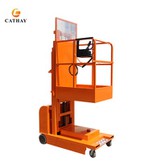
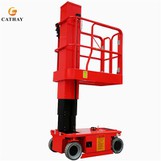
If you are in the market for a vertical mast or need more information about coating options, please do not hesitate to contact us. We are a leading supplier of Self-propelled Mobile Vertical Mast Lift, Mast Aerial Work Platform, and Low Height Portable Lifting Platform, and we can help you find the right solution for your needs. Our team of experts is available to answer your questions and provide you with a free quote. Contact us today to learn more!
References
- Kuznetsov, Y., & Kuznetsova, O. (2018). Corrosion protection of steel structures: State of the art and future trends. Journal of Materials Science and Technology, 34(1), 1-11.
- Schweitzer, P. A. (2013). Corrosion resistance tables (Vol. 1). Elsevier.
- Talbot, J., & Talbot, J. (2012). Corrosion science and engineering. CRC Press.