

Hydraulic Drive: The Silent Guardian of Outdoor Home Elevators
Outdoor environments impose harsher challenges on elevator systems compared to indoor settings, and hydraulic technology naturally excels in these areas.
1. Exceptional Installation Flexibility: Adapting to Complex Terrain and Existing Structures
Low Overhead Requirements: Hydraulic systems rely on a machine room at ground level or underground (which can be as small as an equipment pit), eliminating the need for a traditional overhead machine room and high-strength load-bearing walls required by traction elevators. This is crucial for hillside homes, rooftop renovations, or historic building preservation projects.
Adaptability to Civil Engineering: Can be installed directly next to soil, slopes, or non-vertical facades. Customizable cylinder length and burial depth allow adaptation to terrain, which is difficult to achieve with traction systems.
2. Superior Environmental Tolerance: Resistant to Weather and Temperature Fluctuations
All-Weather Operation: Precision sealing systems (e.g., multiple sealing rings, dust covers) effectively resist intrusion from rainwater, dust, salt spray (coastal areas), and plant debris.
Wide Temperature Range Stability: Modern synthetic hydraulic fluids have a broad operating temperature range (from -30°C to 70°C), ensuring stable performance in extremely cold or hot climates. In contrast, traction system components like steel cables and electrical elements are more prone to issues under extreme temperatures.
Wind Resistance: Outdoor elevator shafts (especially glass sightseeing shafts) may experience slight sway in strong winds. The rigid push-driven mechanism of hydraulic systems (directly lifting the cab via a piston rod) offers an advantage over the flexible steel cable traction of traction systems in resisting minor sway.
II. Core Family Needs: Safety, Quietness, and Reliability
The core characteristics of hydraulic systems precisely address the deep concerns of household users.
1. Inherent Safety: A "Mechanical Safety Net" for the Family
Power Failure Safety: In the event of a power outage, valves automatically close, locking the cab in place without risk of trapping occupants or free-falling. During rescue, a manual pressure relief valve allows for a smooth descent to the nearest floor.
Overspeed Protection: System pressure is strictly limited by relief valves, mechanically capping the speed even under full load, preventing overspeeding.
Precise Leveling: Controlled by hydraulic pressure, stopping accuracy can reach millimeter precision, eliminating tripping hazards-particularly beneficial for wheelchair users and the elderly.
2. Exceptional Operational Quality: Integrating into a Quiet Home Environment
Smooth and Quiet Operation: Hydraulic drive provides continuous, stepless power output, with almost no jerking during start and stop. Noise primarily comes from the motor pump unit, but with soundproofing design and outdoor installation, transmission of noise into the cab and interior is minimal, far superior to the operational noise of traction machines.
3. High Load Capacity and Space Efficiency: Serving Real-Life Scenarios
Heavy Load Capacity: Common residential hydraulic elevators can handle loads of 400–500 kg, easily accommodating wheelchairs, multiple passengers, or large furniture.
Minimal Pit Requirement: Requires only a shallow pit depth (as low as 150–300 mm) and can even be installed with no pit on a slope, significantly reducing excavation and foundation modifications.
The hydraulic outdoor home elevators provide a solution that relies on mechanical reliability to cope with natural variables and safeguard family tranquility. They may not be the "all-around champion" for every scenario, but within their domain of strength, they have proven over decades of stable service to be a trustworthy and well-considered choice.
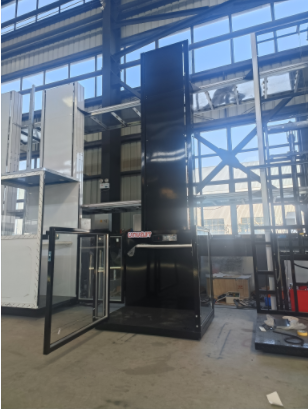
For more information about our outdoor home elevators, please contact us.
Shandong Cathay Machinery Co., Ltd
www.cathaylift.com
Email: sales@cathaylift.com